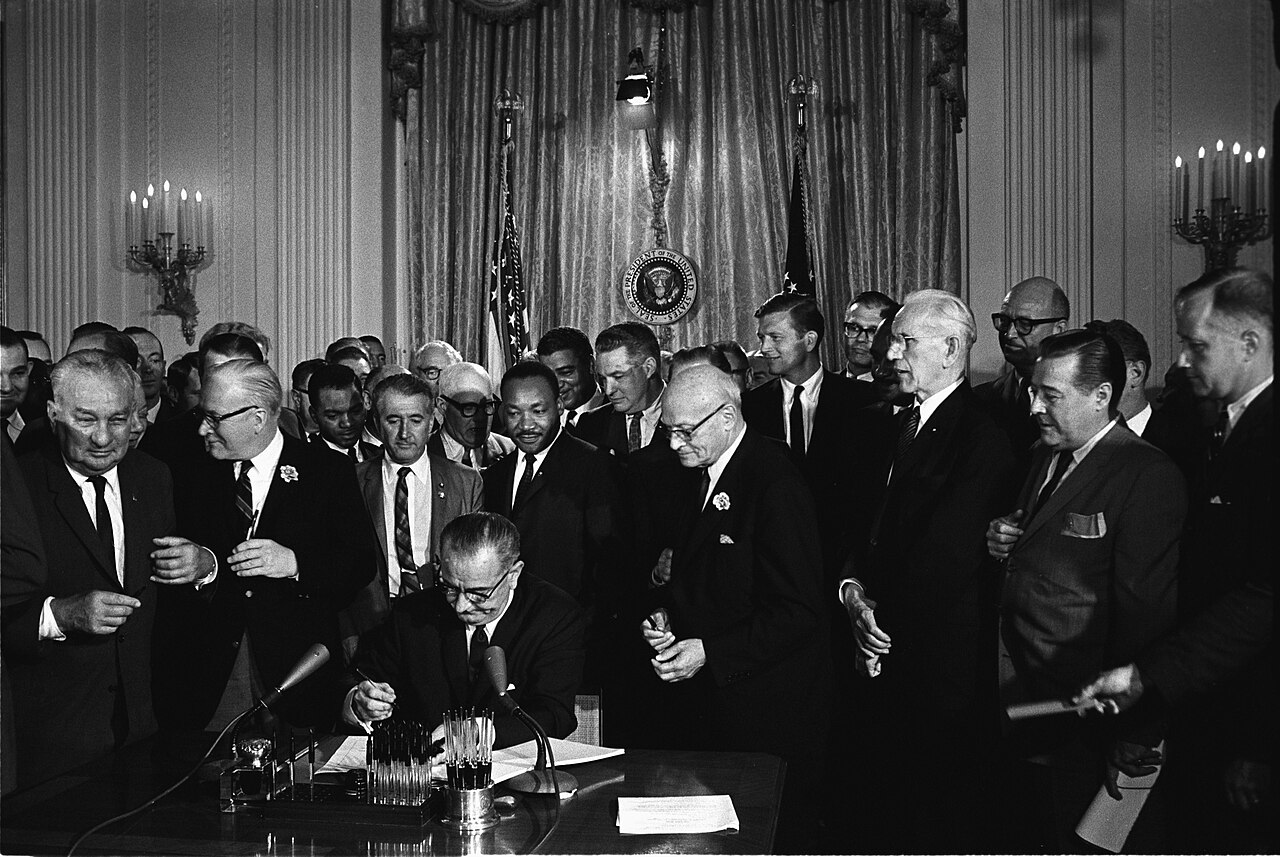
Cecil Stoughton · White House Press Office / LBJ Presidential Library · Public domain · Source & rights record ↗

Look beyond party labels
The Senate’s history describes a bipartisan team working to overcome the filibuster of the Civil Rights Act of 1964. Hubert Humphrey, Thomas Kuchel and Everett Dirksen played important roles in building the support needed for cloture. Opposition and support did not divide neatly into today’s party categories.
Cooperation did not erase injustice
This history should not be reduced to a pleasant story about politicians getting along. The legislation concerned civil rights and discriminatory systems, and its passage faced determined resistance. A coalition’s achievement is best understood alongside the people affected and the struggle that made action necessary.
Study the mechanism
Ask how advocates built support, which institutional barrier had to be overcome and what the final law addressed. Historical cooperation can offer lessons about persistence and legislative work without suggesting that every dispute has a similar resolution. Read the Senate’s account before drawing comparisons with a modern issue.
Bring it to the conversation
- What barrier did the coalition confront?
- Who was affected by the legislation?
- Which comparison is supported by the record?
Official links checked October 14, 2026. Commentary and discussion questions are our own. Confirm current procedures with the relevant official office.